

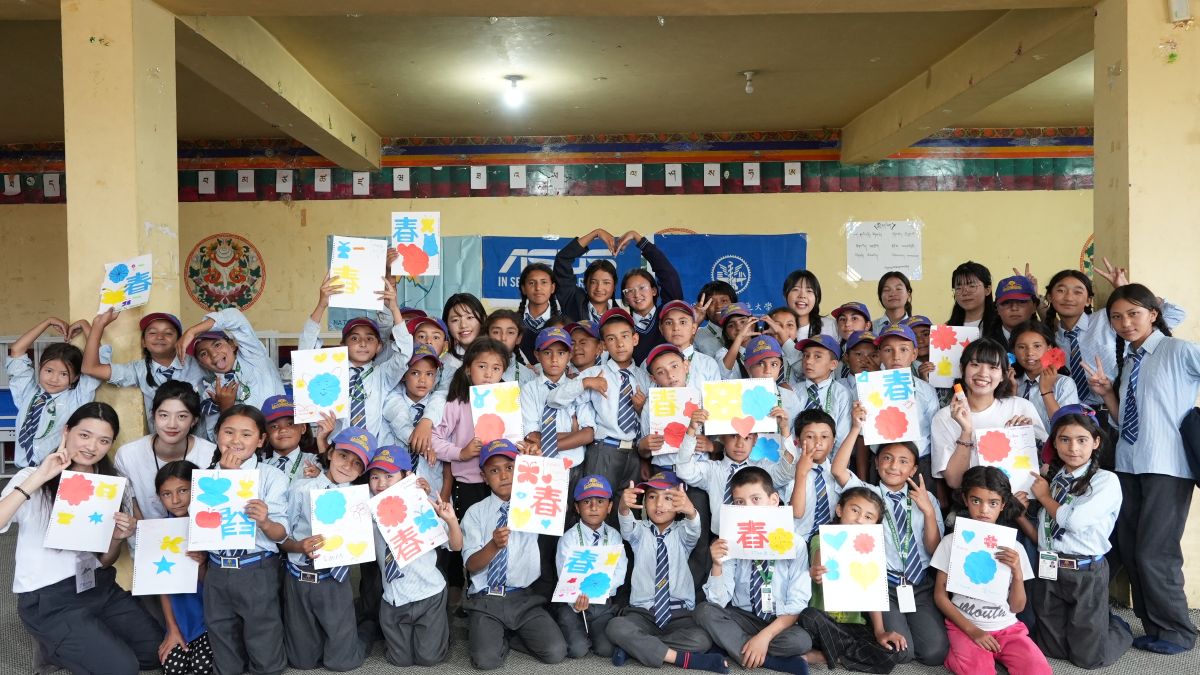
National Yang Ming Chiao Tung University (NYCU) is deepening its global social impact through long-term international volunteer programs that integrate education, public health, and community partnership. Led by the NYCU’s Service Learning Center, these initiatives encourage students to apply academic knowledge in real-world contexts while supporting the United Nations Sustainable Development Goals (SDGs).
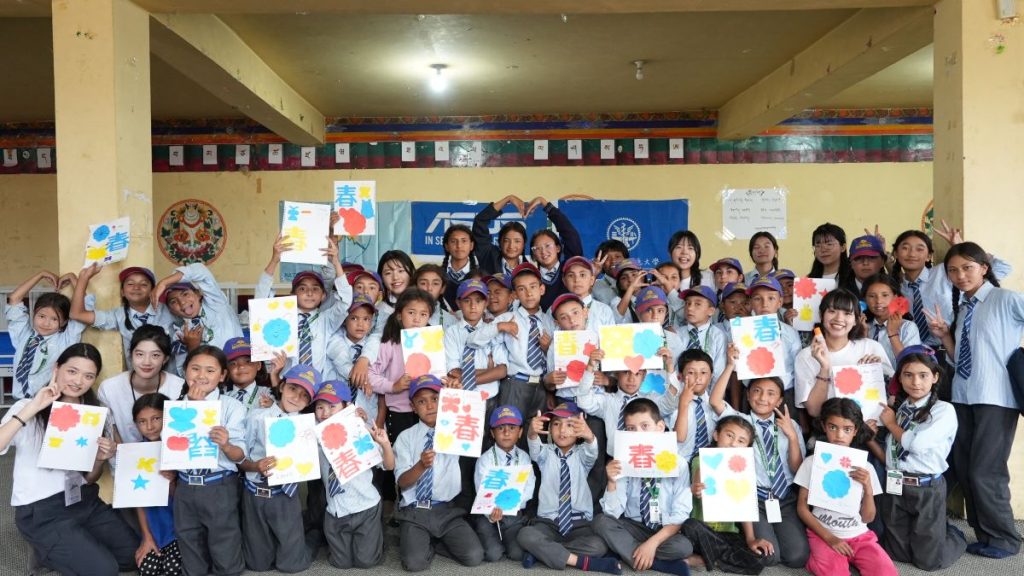
NYCU’s two flagship volunteer programs — the India-based Jullay Team and the Southeast Asia-focused BAT Team — emphasize cross-cultural collaboration, local empowerment, and sustained engagement rather than short-term outreach. Through years of partnership with communities and schools, the programs have built trust-based networks that continue to expand in scope and social impact.
Responding to Local Needs: BAT Team Advances Health Education in Cambodian Communities
Founded in 2019, the BAT Team — named after the “Bridge of ASEAN and Taiwan” — symbolizes both connection and goodwill. In Southeast Asian cultures, bats are associated with good fortune, reflecting the team’s mission to bring constructive, community-centered change through collaborative service.
Since 2024, the team has shifted its focus from architectural projects to physical and mental health education. In 2025, under the guidance of faculty with medical expertise, students delivered health-learning programs across three communities in Cambodia, reaching approximately 229 residents. The initiative received strong recognition from both community partners and external organizations, earning awards from the ASUS Foundation and Taiwan’s Ministry of Education Youth Overseas Volunteer Service Program for excellence in service outcomes and evaluation.
Community participation continues to grow. Some residents shared that after joining last year’s courses, they were eager to return this year. Ann, a local university student who once attended the workshops, returned as a program facilitator and English–Khmer interpreter — hoping, she said, to become “someone who brings change.” Her story reflects the program’s expanding, locally rooted influence.
To strengthen long-term impact, the BAT Team also used ten ASUS-donated laptops to support four Cambodian university students in developing community-tailored health posters and teaching materials. The effort not only builds sustainable educational resources but also equips local youth with digital skills to support public-health learning in their own communities.
Fifteen Years in Ladakh: Jullay Team Expands Educational Opportunities Through Long-Term Commitment
Named after the Ladakhi greeting “Jullay,” NYCU’s India-based volunteer team has been active in the Himalayan region since 2011 — marking its 15th year of continuous engagement. Centered on education, the program has cultivated enduring partnerships with local schools while supporting students in resource-limited environments.
During the summer of 2025, the 15th Jullay Team — composed of eight students from diverse disciplines — conducted educational programs from June to July across three partner schools: Jamyang School, Rigjung Public School, and Likir Monastery School. Tailored course design and multi-site collaboration enabled the team to reach around 450 students and teachers.
At Jamyang School, courses integrated Python programming, Arduino-based hands-on learning, and sensor applications to strengthen computational thinking and problem-solving skills. Additional modules on local issues, media literacy, and mental health encouraged students to reflect on social change, information awareness, and emotional well-being.
With support from the ASUS Foundation, the team also enhanced access to digital learning by providing 50 new computers, six refurbished laptops, and 278 English-language books. The contributions enabled Rigjung Public School to establish a fully equipped computer classroom. They supported the first refurbished computer lab at Likir Monastery School — significantly expanding learning infrastructure in underserved areas.
Shared Learning and Growth: Reflections from Faculty and Schools
Dr. Da-De Ji, faculty advisor to the BAT Team, described the Cambodia service experience as “beginning with uncertainty and ending with gratitude.” Initial concerns centered on course design, alignment with local health needs, and student safety. Through the process, he said, he witnessed students’ determination to deliver accurate medical knowledge. He expressed deep appreciation for the support of local partners, NYCU, and sponsoring organizations.
Professor Mei-Ling Pan of the Department of Humanities and Social Sciences, advisor to the Jullay Team, noted that while multi-site service increases logistical challenges, it also deepens students’ adaptability and cultural awareness. Service-learning, she emphasized, not only meets local educational needs but strengthens students’ sense of civic responsibility and social engagement — outcomes made possible through long-term trust and collaboration.
Partner schools also reported meaningful progress. Rigjung Public School saw increased student motivation for computer learning. At the same time, Jamyang School praised the team’s sustained commitment and innovative, issue-based curriculum that broadened students’ perspectives on learning and future opportunities.
Service as Accompaniment: Building Sustainable International Engagement
For many student volunteers, international service becomes an experience of reciprocal growth. One BAT Team member reflected that while communities benefit from the programs, volunteers also gain new understanding: “Compared to what we give, we receive even more.” Through dialogue and shared experience, students learned that connection — not intervention — lies at the heart of meaningful service.
A Jullay Team student shared a similar insight: “I moved between the roles of lecturer and learner — slowing down and discovering meaning in ordinary moments.” Such reflections reveal how service evolves from a temporary activity into a journey of empathy, responsibility, and mutual learning.
Looking ahead, NYCU plans to deepen local partnerships, strengthen course follow-up mechanisms, empower youth leaders, and expand the development of teaching resources. By integrating digital tools and broader institutional support, the university aims to extend the reach of education and health initiatives — accompanying more communities toward a sustainable and inclusive future.
By the Service Learning Center
Edited by Chance Lai
Source: NYCU News

![[NYCU SDGs Project] No More Loniness For Learning Disabilities](https://sdgs.nycu.edu.tw/wp-content/uploads/圖片-41-768x415.jpg)
