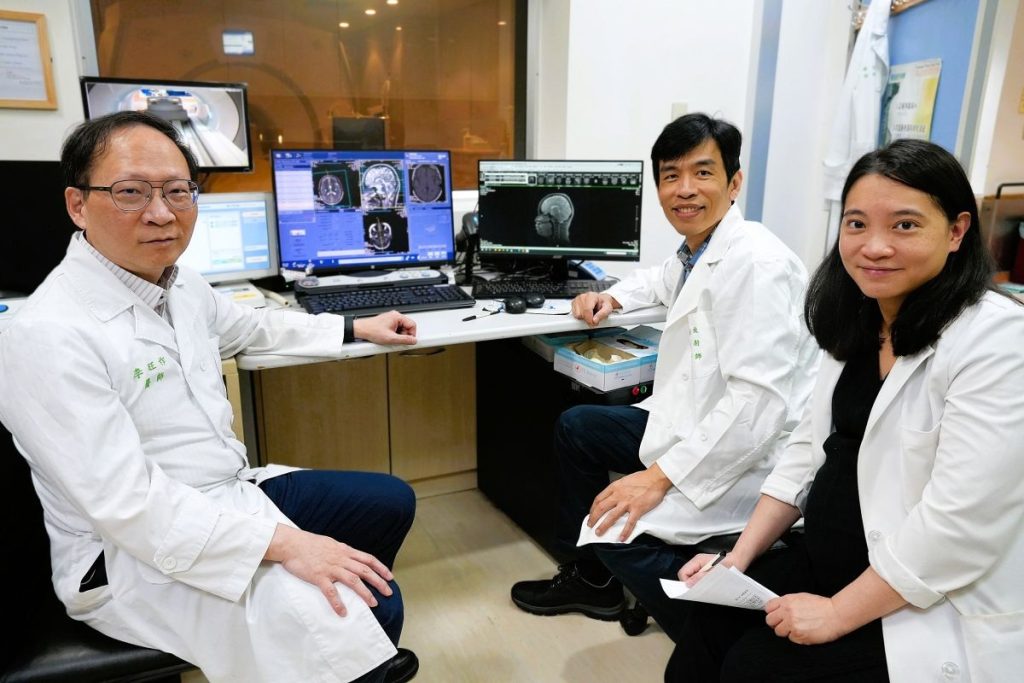
At the heart of every expecting parent lies a hope—to detect and address any health challenges their child may face as early as possible. Now, a pioneering collaboration between National Yang Ming Chiao Tung University (NYCU) and National Taiwan University Children’s Hospital (NTUCH) has taken a significant step toward that goal, developing an innovative diagnostic workflow to assess the severity of FOXG1 syndrome—a rare and complex neurological disorder. These breakthrough findings were published in the high-impact journal Molecular Psychiatry.
Decoding a Rare Disease: From Genetic Mutation to Clinical Insight
FOXG1 syndrome is a rare neurodevelopmental condition caused by mutations in the FOXG1 gene, which plays a critical role in early fetal brain development. The condition manifests along a broad clinical spectrum, from severe epilepsy, motor dysfunction, feeding difficulties, and profound intellectual disability to milder forms associated with autism. Most patients are non-verbal and non-ambulatory, and symptoms vary significantly between individuals.
Previously classified as an atypical form of Rett syndrome, FOXG1 syndrome affects roughly one in every 30,000 newborns, with approximately 1,200 known cases worldwide.
While next-generation sequencing (NGS) can identify FOXG1 gene mutations, it provides limited insight into how different mutations translate into varying degrees of clinical severity. This diagnostic gap leaves parents overwhelmed and physicians uncertain about potential treatment interventions.
To address this challenge, Professor Jin-Wu Tsai of NYCU’s Institute of Brain Science and Dr. Wang-Tso Lee, Director of NTU Children’s Hospital (NTUCH), led an international study analyzing clinical and neuroimaging data from 14 FOXG1 patients across Europe, North America, Japan, and Taiwan.
Based on their findings, the team developed a novel three-tiered experimental approach—combining protein expression profiling, gene regulatory analysis, and mouse embryo neuronal migration assays—to assess the functional consequences of different FOXG1 mutations. The resulting diagnostic pipeline can predict brain abnormalities with over 90% accuracy.
Predicting Risk, Guiding Care: A Milestone in FOXG1 Diagnosis
“This approach enables clinicians to do more than simply identify a mutation—it helps them understand its clinical risk,” said Prof. Tsai. “For the first time, we can assess the pathogenicity of specific FOXG1 variants and predict the likely severity of symptoms. This is a crucial advancement for children and families affected by this devastating condition.”
“Families dealing with rare diseases often feel trapped in a maze of unanswered questions,” said Dr. Lee. “Our goal is to bridge that gap. By integrating NGS with our new predictive tools—ideally during prenatal or neonatal stages—we can better plan early interventions and offer more informed support to affected families.”
Although these experimental techniques are not yet part of routine clinical testing, the study offers compelling preliminary evidence for the future development of personalized diagnostic tools. The research team emphasized that further validation and creating more scalable testing platforms will be key to clinical adoption.
As research into rare genetic diseases advances, this collaboration between NYCU and NTUCH underscores the power of interdisciplinary innovation and brings new hope to families worldwide.
Edited by Chance Lai
Source : NYCU News