2025 NYCU literacy_assessment (faculty) Analytics report~~
How do faculty and staff at National Yang Ming Chiao Tung University perform in terms of awareness and engagement with the UN Sustainable Development Goals (SDGs) based on the 2025 survey?
The analysis below provides an overview.
Respondent Profile
The survey was conducted from December 2 to December 18, 2025.
The target population consisted of current faculty and staff at National Yang Ming Chiao Tung University aged between 18 and 80. A total of 305 valid responses were collected.
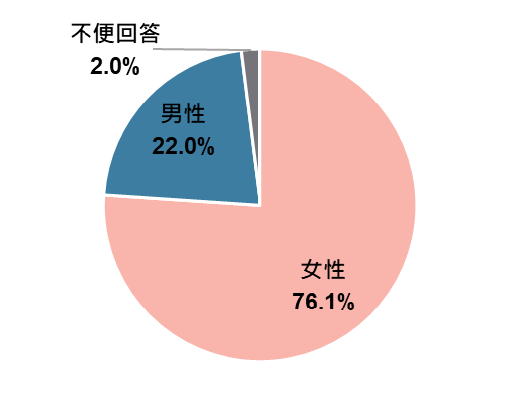
Figure 1. Gender Distribution of All Respondents
Overall Response Overview
Respondents’ Background Knowledge of the Sustainable Development Goals
The questionnaire included a total of 15 knowledge-based questions, covering key topics such as sustainability literacy, climate change, water,sustainable cities and communities,
ecosystems, social equity, energy, and responsible consumption and production. On average, respondents answered 13.1 questions correctly, with an overall accuracy rate of 87.0%.
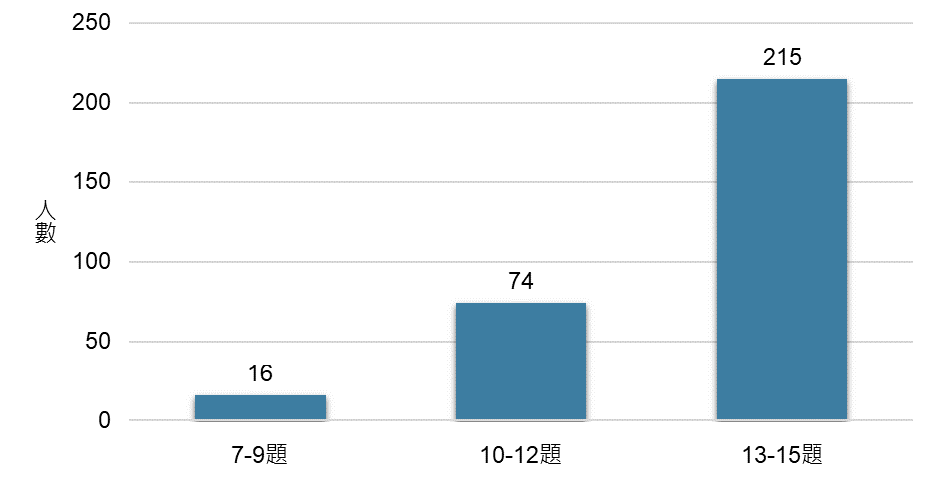
Figure 2. Distribution of Correct Answers Among All Respondents
Among all knowledge-based questions, the top three with the highest accuracy rates were mainly related to topics such as agricultural and ecological sustainability, climate change impacts, and the concept of biodiversity.
The question with the lowest accuracy rate was related to carbon reduction actions and low-carbon lifestyles.(For detailed questions, accuracy rates, and number of correct responses, please refer to the full report.)
Willingness to Take Action
In addition to understanding respondents’ awareness and attitudes toward sustainability literacy, it is also important to explore how sustainability is practiced in daily life.
With the increasing availability of sustainable products and services, along with government policies and incentive programs, more people are able to incorporate sustainability into their everyday lives.
Through five behavior-based questions designed in this study, respondents’ willingness to take action was examined,
as well as the types of sustainable practices they have adopted across different aspects of daily life, including food, clothing, housing, transportation, and leisure.
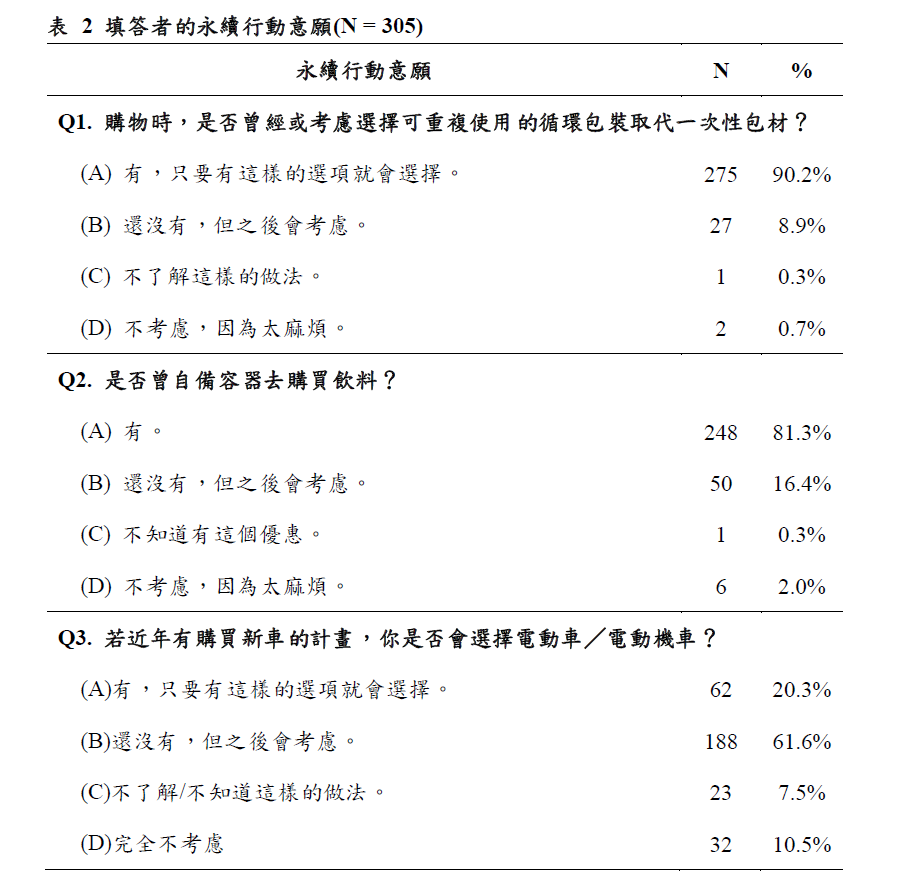
Which sustainable actions are most commonly practiced by respondents?
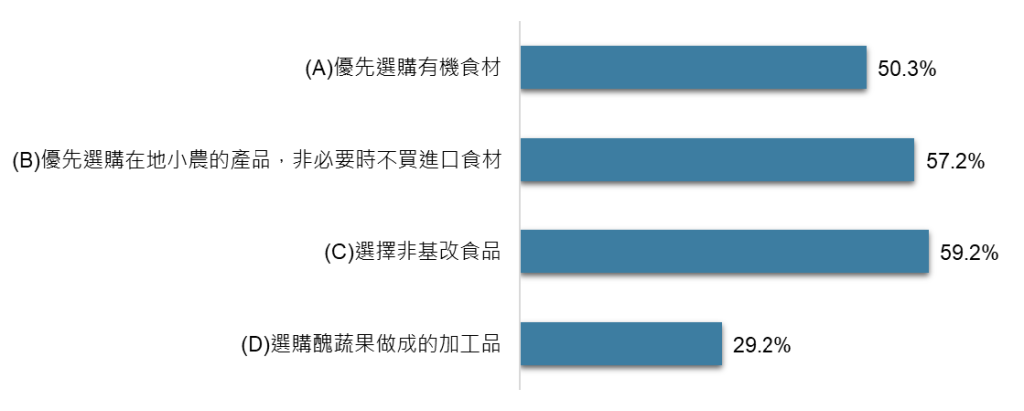
Daily Diet
More than half of the respondents reported adopting sustainable practices such as prioritizing the purchase of organic food (55.7%),
choosing products from local farmers and avoiding imported food unless necessary (72.8%), and selecting non-GMO products (67.2%).
In addition, 27.5% of respondents indicated that they purchase processed products made from “imperfect” or surplus fruits and vegetables as a sustainable choice.
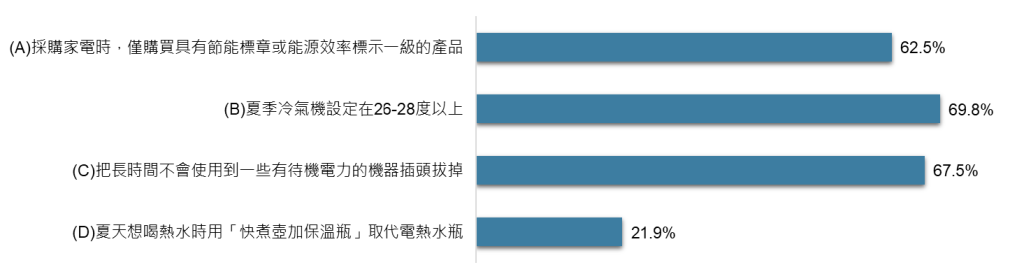
省電措施Energy-Saving Measures
More than 60% of respondents reported that when purchasing household appliances, they only choose products with energy-saving labels or the highest energy efficiency rating (87.2%).
Nearly 70% of respondents set their air conditioners to 26–28°C or higher during the summer (69.5%), indicating a strong awareness of and commitment to energy conservation and carbon reduction practices.
In addition, 73.1% of respondents unplug appliances that consume standby power when not in use for extended periods.
However, only 38.0% reported replacing electric water dispensers with a combination of electric kettles and insulated bottles during the summer.
Daily Commuting
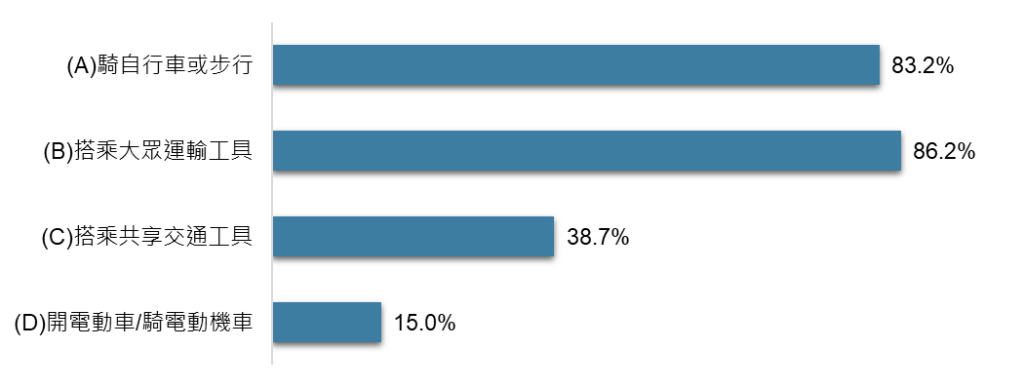
Most respondents reported adopting low-carbon transportation methods, such as cycling or walking (82.0%) and using public transportation (79.7%),
indicating a strong commitment to reducing transportation-related carbon emissions in their daily commuting and travel.
In comparison, 38.4% of respondents have used or are willing to use shared mobility services.
Additionally, 24.9% of respondents reported that they drive electric cars or ride electric scooters.