The problem of global warming is becoming increasingly severe and harms ecology and the climate. The heat island effect caused by urban cementing exacerbates this problem, leading to an increase in energy consumption for air conditioning. The DIYGreen zero-waste, circular rooftop garden developed by Professor Jehng-Jung Kao’s research team at National Yang Ming Chiao Tung University’s Institute of Environmental Engineering is capable of insulation, reducing the surface and indoor temperature of the roof. As a result, it can reduce the energy consumption of air conditioning. Research also shows benefits such as energy savings, carbon reduction, reduction of the greenhouse effects, increased green coverage, reduction of the heat island effect, harvesting the rainwater, reduction of surface discharge, improvement of air quality, improvement of architecture, and supply of locally grown fruits and vegetables. As a result, it has received attention domestically and internationally and is currently being promoted in various counties and cities.
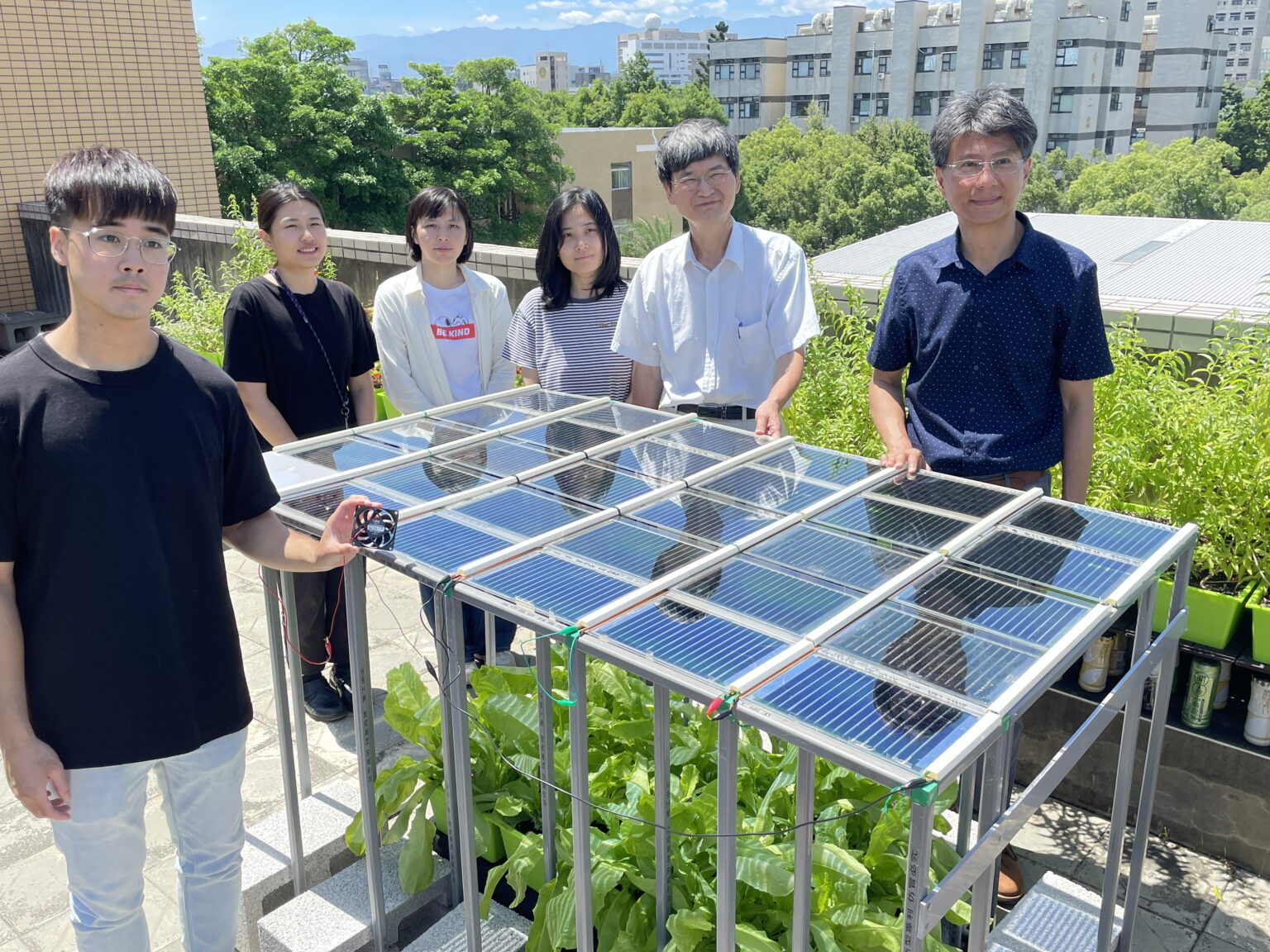
However, due to the lack of domestic energy resources, the installation of solar panels is actively promoted. However, when solar panels are installed on the roof, traditional solar panels block the sunlight required by plants, making it impossible to build rooftop gardens at the same time. This limitation forces us to choose between installing solar panels or rooftop gardens, which is regrettable. Fortunately, Hsin-Fei Meng’s research team at NYCU’s Institute of Physics has successfully developed transparent solar panels that not only generate electricity but also allow light to pass through. Through the collaboration of the two research teams, a demonstration farm was built on the roof platform of the NYCU Environmental Engineering Building. This farm uses transparent solar panels to produce electricity while allowing sunlight to reach the vegetables below, promoting mutual development and prosperity.
The DIYGreen prototype uses recycled bottles as a base, allowing users to grow vegetables and fruits on the roof or balcony of their house. Recycled bottles are used as water storage, allowing the garden to require low maintenance. In addition to the germination period, watering is only needed once a week. Furthermore, with the introduction of a circular system to breed earthworms, kitchen waste can be efficiently digested and transformed into high-quality organic compost that is returned to the garden to promote plant growth. Nutritionally-rich vermicompost, rich in microorganisms, can be used as a bedding material to build virtually odorless chicken houses for egg harvesting. This creates a zero-waste cycle that produces high-quality food with minimal carbon footprints for the family. However, if traditional solar panels are installed above and block sunlight, it becomes challenging to create the DIYGreen rooftop garden. If transparent solar panels are used, it is still possible to build a DIYGreen rooftop garden underneath them.
The organic solar cells have an absorber layer thickness of only 100 nanometers and are coupled with silver electrodes with a thickness of 15-20 nanometers. This combination allows the production of solar panels with approximately 20% transparency. The large-area module efficiency achieved by NYCU’s Organic Semiconductor Laboratory reaches 10%, and the lifetime under illumination reaches thousands of hours. This achievement represents an international leading level. The Organic Semiconductor Laboratory, under the guidance of Professor Hsiao-Wen Zan, works closely with Professor Yu-Chiang Chao from the National Taiwan Normal University on the solar cell project.