From Rocket Science to Wound Care: NYCU Prof. Jong-Shinn Wu Translates Aerospace Plasma Tech into Biomedical Breakthrough
Known in Taiwan as the “Rocket Uncle,” Jong-Shinn Wu—Director General of the Taiwan Space Agency (TASA) and a professor of mechanical engineering at National Yang Ming Chiao Tung University (NYCU)—is bringing aerospace-grade innovation back down to Earth.
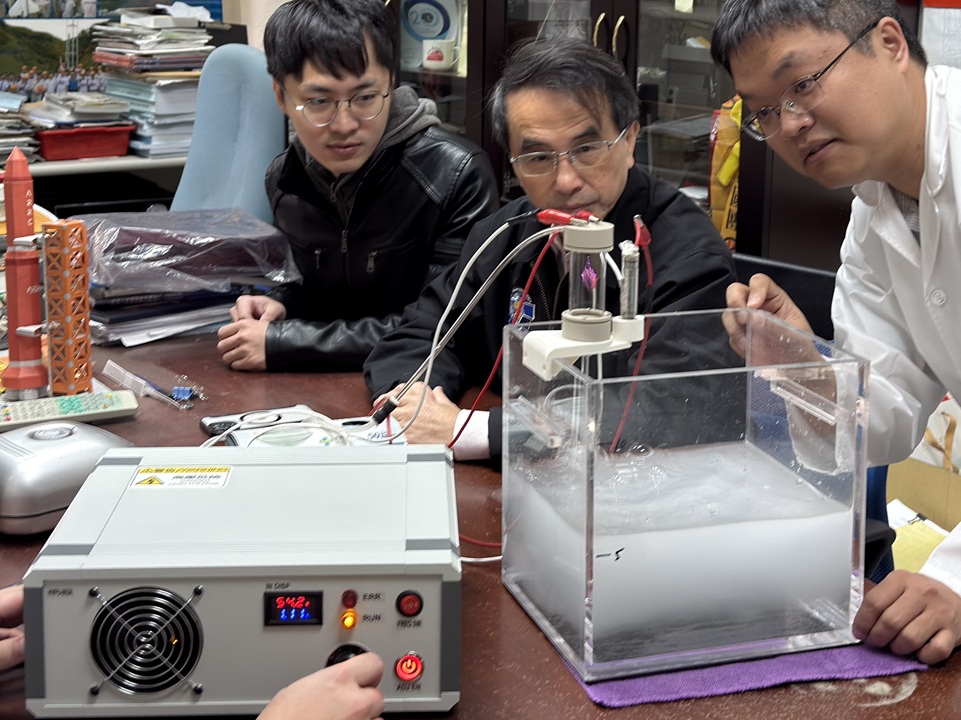
In his latest cross-disciplinary breakthrough, Wu and his research team have successfully adapted low-temperature plasma technology—originally developed for aerospace applications—into the biomedical field. By integrating plasma science with micro- and nano-bubble technology, the team has developed a novel system capable of both sterilizing and accelerating the healing of chronic wounds, such as diabetic foot ulcers and pressure sores.
A “Rocket-Grade” Solution for Chronic Wounds
The patented technology, known as a “dual-module plasma microbubble water system,” introduces a two-stage therapeutic mechanism: sterilization followed by tissue regeneration.
In the first stage, oxygen-based reactive species, such as ozone (O₃), effectively suppress harmful pathogens. In the second stage, nitrogen-based reactive species, such as nitric oxide (NO), promote tissue repair and regeneration. This dual-action process enables a “one-step” solution for both infection control and wound healing, as researchers describe.
The innovation is particularly promising for difficult-to-treat chronic wounds, offering the potential to improve clinical care and patient recovery outcomes.
Breaking Through the Limits of Conventional Plasma Technology
Plasma technology has long been widely used in aerospace engineering, particularly in coating processes for rockets and satellites. Wu, who has spent years advancing plasma applications at NYCU, began exploring its biomedical potential after encountering micro- and nano-bubble technologies during his research.
Conventional plasma-activated water systems typically rely on oxygen-based reactive species, which provide strong antibacterial effects but are limited in broader biomedical applications. To overcome this constraint, Wu’s team pioneered a “dual-mode dynamic plasma” system that combines both oxygen- and nitrogen-based reactive species.
By precisely controlling the ratio of these reactive components, the system can generate tailored compositions suited for different applications. When integrated with micro- and nano-bubble water, the result is a biocompatible and highly versatile platform for medical use.
Beyond Wound Care: Expanding Applications Across Industries
Beyond chronic wound treatment, the technology demonstrates significant cross-sector potential. Possible applications include dermatological therapies, aesthetic medicine, and health maintenance, as well as high-standard sterilization processes for food and agricultural products.
The development highlights the growing role of plasma technology not only in aerospace, but also in healthcare and industrial innovation.
Bridging Space Technology and Human Health
From rocket propulsion systems to human-centered medical care, Wu’s work exemplifies how advanced technologies can be translated across disciplines to address real-world challenges.
Looking ahead, the NYCU team plans to accelerate technology transfer and expand industry-academia collaboration, aiming to bring biomedical plasma applications into clinical and commercial use—turning “rocket-grade” innovation into tangible healthcare solutions.